- Overview
- Trip Outline
- Trip Includes
- Trip Excludes
- Gallery
- Reviews
- Booking
- FAQ
7-Day Rongai Route is the only official climbing route that approaches Mount Kilimanjaro from the northern side near the Kenya border. It is known for its peaceful trails, beautiful wilderness scenery, and lower traffic compared with the popular Machame and Marangu routes.
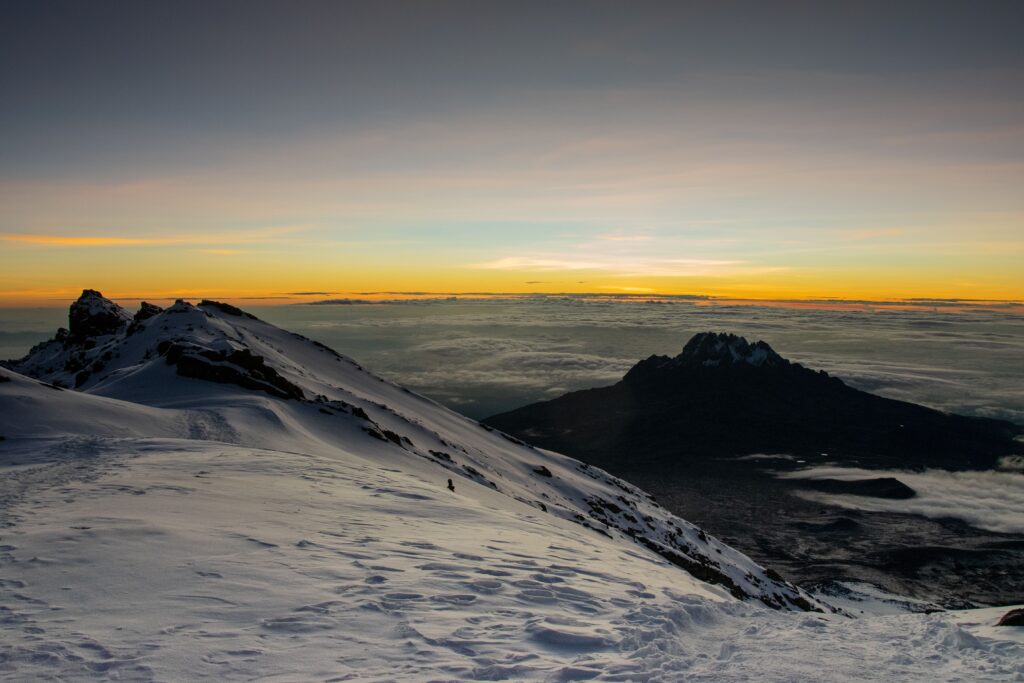
Rongai offers a gradual ascent through different ecological zones, including farmland, rainforest, moorland, alpine desert, and the summit zone. The route provides excellent views of Mawenzi Peak and the northern slopes of Kilimanjaro.
The 7-day itinerary includes an important acclimatization day at Mawenzi Tarn, making it a better option for climbers who want a quieter experience with improved summit chances.
Route Highlights
- Duration: 7 Days / 6 Nights
- Difficulty: Moderate to Challenging
- Distance: Approximately 65 km (40 miles)
- Highest Point: Uhuru Peak (5,895 m / 19,341 ft)
- Success Rate: Around 80–85%
- Accommodation: Mountain tents
- Starting Gate: Rongai Gate (1,950 m)
- Ending Gate: Marangu Gate (1,870 m)
- Best For: Climbers seeking a quieter route and gradual ascent
Itineraries
Day 1: Rongai Gate to Simba Camp
Distance: 8 km (5 miles)
Hiking Time: 4–5 hours
Altitude: 1,950 m to 2,625 m
After breakfast in Moshi, you drive toward Rongai Gate for registration and preparation.
The trek begins through farmland and pine forest before entering the rainforest zone. The trail is quieter than most routes and offers opportunities to see birds and wildlife.
You arrive at Simba Camp for your first night on Kilimanjaro.
Meals: Lunch, Dinner
Accommodation: Simba Camp
Day 2: Simba Camp to Second Cave Camp
Distance: 5 km (3 miles)
Hiking Time: 3–4 hours
Altitude: 2,625 m to 3,450 m
The trail continues upward through the moorland zone. The forest becomes thinner, revealing wider views of the surrounding landscape.
You pass through open heath areas while enjoying views of Kibo Peak and the eastern slopes of Kilimanjaro.
Meals: Breakfast, Lunch, Dinner
Accommodation: Second Cave Camp
Day 3: Second Cave Camp to Kikelewa Camp
Distance: 5 km (3 miles)
Hiking Time: 4–5 hours
Altitude: 3,450 m to 3,630 m
Today the route leaves the main trail and becomes more remote. The landscape changes into alpine desert with spectacular views of Mawenzi Peak.
The shorter hiking distance allows time for relaxation and acclimatization.
Meals: Breakfast, Lunch, Dinner
Accommodation: Kikelewa Camp
Day 4: Kikelewa Camp to Mawenzi Tarn Camp
Your Plan
Distance: 5 km (3 miles)
Hiking Time: 4–5 hours
Altitude: 3,630 m to 4,330 m
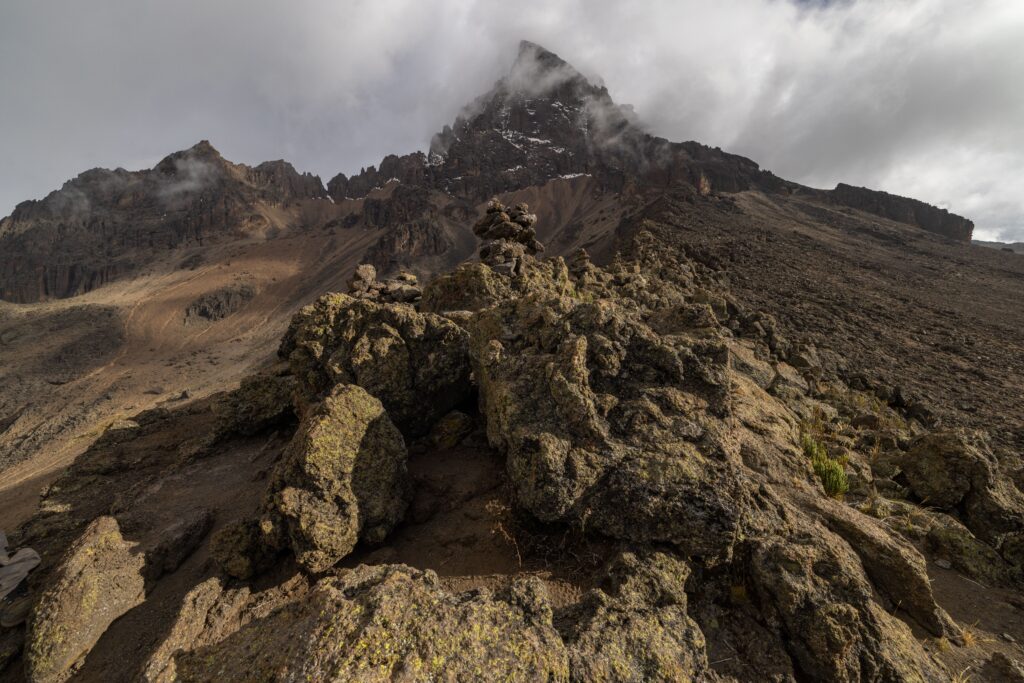
The trail climbs steadily toward Mawenzi Tarn, located beneath the impressive Mawenzi Peak.
This is one of the most scenic camps on Kilimanjaro, surrounded by volcanic rock formations and dramatic mountain views.
Meals: Breakfast, Lunch, Dinner
Accommodation: Mawenzi Tarn Camp
Day 5: Mawenzi Tarn Camp to Kibo Hut
Distance: 8 km (5 miles)
Hiking Time: 5–6 hours
Altitude: 4,330 m to 4,703 m
Today you cross the Saddle, the high alpine desert between Mawenzi and Kibo peaks.
The environment becomes increasingly barren as you approach Kibo Hut, the final camp before the summit.
You will have an early dinner and rest before the summit attempt.
Meals: Breakfast, Lunch, Dinner
Accommodation: Kibo Hut
Day 6: Kibo Hut to Uhuru Peak to Horombo Hut
Distance: 22 km (14 miles)
Hiking Time: 12–16 hours
Altitude: 4,703 m → 5,895 m → 3,720 m
Around midnight, you begin the final ascent to Uhuru Peak.
The trail climbs through volcanic scree toward Gilman's Point before continuing along the crater rim to Stella Point and Uhuru Peak, the highest point in Africa.
After celebrating at the summit, you descend through Kibo Hut and continue to Horombo Hut for overnight rest.
Meals: Breakfast, Lunch, Dinner
Accommodation: Horombo Hut
Day 7: Horombo Hut to Marangu Gate
Distance: 20 km (12 miles)
Hiking Time: 5–7 hours
Altitude: 3,720 m to 1,870 m
The final descent passes through the moorland and rainforest zones.
At Marangu Gate, you complete park procedures and receive your Kilimanjaro summit certificate before transferring back to Moshi.
Meals: Breakfast, Lunch
- Airport transfers
- Transport to and from Kilimanjaro gates
- Kilimanjaro National Park fees
- Camping fees
- Rescue fees
- Professional mountain guide
- Assistant guides
- Experienced porters
- Mountain cook
- Quality mountain tents
- Sleeping mattresses
- Dining tent and camping equipment
- Three meals daily during the climb
- Drinking water
- Emergency oxygen
- Pulse oximeter monitoring
- First aid equipment
- Summit certificate
- Government taxes
- International flights
- Tanzania visa
- Travel insurance
- Personal trekking equipment
- Sleeping bag rental
- Personal snacks and drinks
- Tips for guides, porters, and cooks
- Hotel accommodation before or after the climb
- Laundry services
- Personal expenses
Yes. The gradual ascent and extra acclimatization day make it suitable for beginners with good fitness.
Rongai is quieter, approaches from the northern side, and offers a unique wilderness experience.
Rongai has a gentler approach, but the summit climb is still challenging because of the altitude.
The 7-day Rongai Route has a success rate of around 80–85%.
The lower sections pass through areas where wildlife such as monkeys and birds may be seen.
Yes. Rongai uses mountain camping throughout the route.
The best seasons are January–March and June–October.
Yes, with proper preparation and physical fitness.
Related Trips
There are no reviews yet.